Spotlight PA is an independent, nonpartisan and nonprofit newsroom producing investigative and public-service journalism that holds power to account and drives positive change in Pennsylvania. Sign up for our free newsletters.
HARRISBURG — In May of 2003, Stacy Garrity was in Iraq with the U.S. Army Reserve when she had to make a difficult decision.
Garrity was a 38-year-old major tasked with helping to process incoming and outgoing prisoners of war at Camp Bucca in southern Iraq, just a few months after the U.S. invasion had begun. A newly arrived detainee came through her line with a cracked nose and blood flowing down his face.
She asked him through a translator what had happened, and was told that en route to the camp, U.S. soldiers had brutally kicked and stepped on him and other prisoners.
After hearing similar accounts from two soldiers who witnessed the incident, Garrity spoke to a high-ranking sergeant in another unit about reporting the abuse. That person advised against an official report, according to Garrity. The next morning, she made one anyway.
Garrity wasn’t the only one — at least one other soldier, then-Major Al Garbarino, heard about the incident secondhand and reported it immediately, he told Spotlight PA.
The aftermath of that bus incident and those reports divided the camp, according to testimony Garrity gave in a 2004 military investigation into soldiers’ mistreatment of prisoners at an internment facility in Iraq. Garrity noted she felt personally targeted by her colleagues for speaking up.
“I lost a lot of friends,” Garrity said at the time, “but I would report it again.”
More than two decades later, Garrity, now 62, is Pennsylvania’s second-term treasurer and Republican nominee for governor. She will face Democratic Gov. Josh Shapiro this November.
She often talks about her military career on the campaign trail, highlighting the accolades she received and describing how it prepared her for public service. But this particular episode rarely makes it into her stump speeches.
“It was kind of a tough time,” Garrity told Spotlight PA. “I had death threats.”
Detailed accounts of those years of the Iraq War — and Garrity’s role in them — were compiled as part of the 2004 abuse investigation, which informed a record of soldiers’ conduct in Iraq known as the Taguba Report. Its findings, and the now-infamous images of human rights violations at the Abu Ghraib internment facility, cast a shadow over the United States’ war on terror.
Camp Bucca, hundreds of miles southeast of Abu Ghraib, did not receive as much public attention, but many details about the bus incident Garrity reported were highlighted in the military’s investigation and subsequent court martials of soldiers who served there.
Some soldiers left the military in disgrace after this period of the Iraq War. Garrity, on the other hand, emerged with a reputation that later became the foundation of her political career. A 2004 NPR story credited her with helping make Camp Bucca “happy,” as one former prisoner put it, and called her the “Angel of the Desert.”
In her next deployment, several years later, Garrity was placed in acting command of the camp.
‘Leaning forward in the foxhole’
Bucca was the largest internment camp in Iraq for prisoners of war, who ranged from Al Qaeda leaders to civilians taken in mass arrests. It was by many accounts undermanned, under-resourced and overcrowded with prisoners through much of the Iraq War.
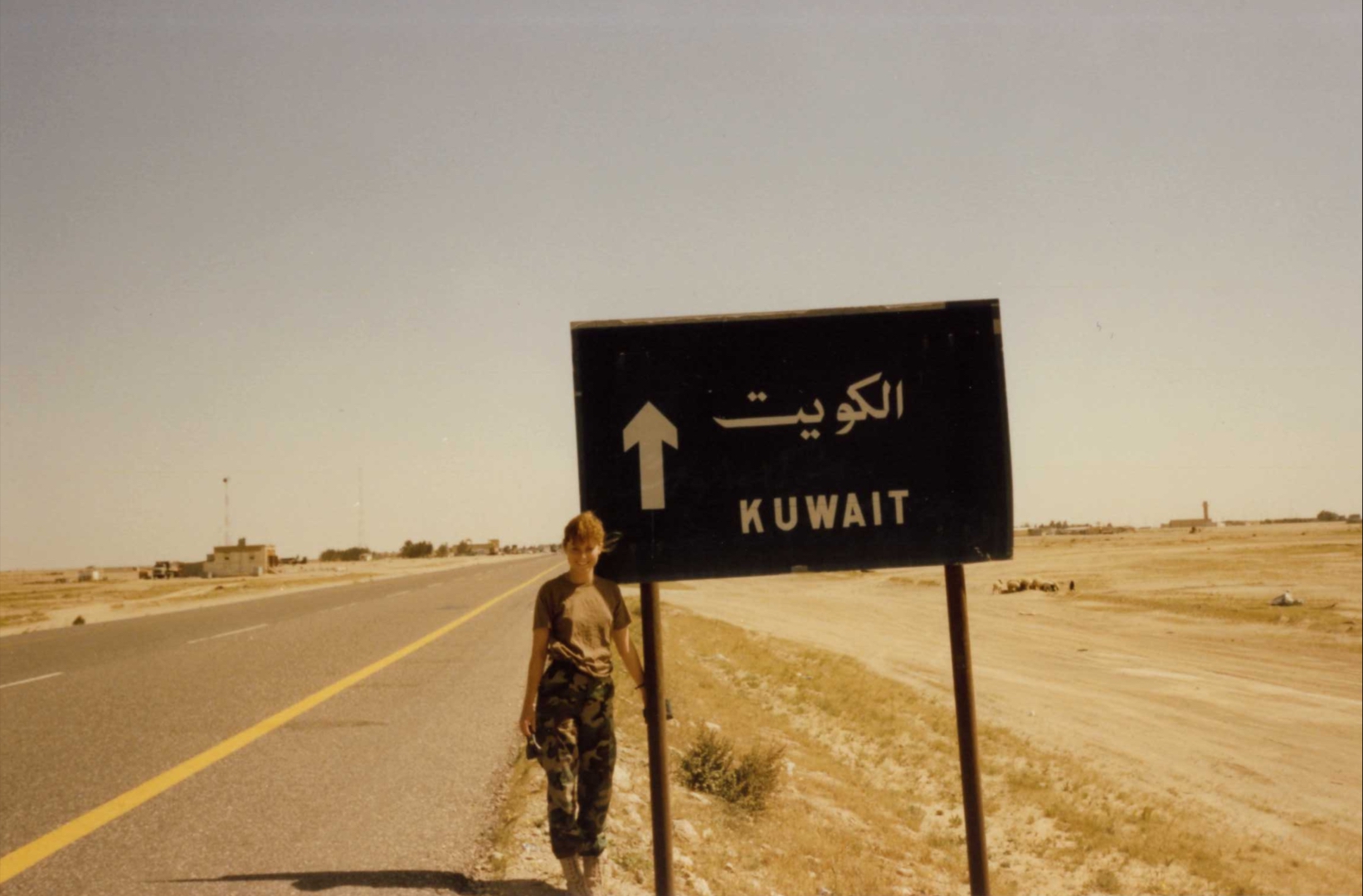
Garrity said in her Taguba Report testimony that the camp “started out on a landfill” and lacked showers, latrines and a dining hall when she first arrived in 2003. She lived in a tent for more than a year there, she told Spotlight PA.
In the mornings, Garrity said she would shake out her boots in case a scorpion had crawled in overnight. She remembers daily temperatures soaring well above 100 degrees.
“Sometimes there were days and days of sandstorms where you can’t even see your hand in front of you,” Garrity said.
Bucca was Garrity’s second deployment as a reservist; she had previously served in the Gulf War in the early ‘90s. This time, her priority as the S-1 administrator of detainee operations was to register all incoming and outgoing prisoners of war. Colleagues she served with told Spotlight PA she specialized in the software used as a central database of all the inmates. One of her big responsibilities, she said, was sending what’s known as a “theater detainee rollup” report.
“You have to account for detainees that were transferred among facilities, if any were sick, if there were any escapes, if there were any that had passed away,” Garrity said. “You had to always have 100% accountability.”
U.S. news outlets covering the camp, as well as soldiers with whom Garrity served, all described her as being notably kind to the camp’s prisoners.
NPR and the Hazleton Standard-Speaker credited Garrity with launching a school and post office system for detainees at Camp Bucca, as well as providing them with soccer balls. Some prisoners, as NPR reported, gave Garrity gifts and wrote her thank-you cards.
She had a “great amount of compassion” for Bucca’s prisoners of war, said U.S. Army veteran Mike Sheridan of New York, a friend who served with Garrity at the camp.
In Iraq, Garrity clashed with a commanding officer — then-Brigadier General Janis Karpinski, who was among the leaders ultimately blamed in the 2004 Taguba Report for failing to prevent the reported cases of abuse at Abu Ghraib. As a consequence, President George W. Bush demoted Karpinski from her one-star general rank in 2005.
Karpinski has since said repeatedly she was scapegoated by the administration.
While at Camp Bucca, Garrity served under Karpinski, who oversaw the 800th Military Police charged with running all the Iraqi prisons. Their relationship came up in the Taguba Report.
“I didn’t have a good experience with BG Karpinski,” Garrity is quoted as saying in the report. “The only conversation I had with her was very negative,” she said, adding that Karpinski “[berated] and demeaned me in a way I’ve never been demeaned in my 17 ½ years as an officer.”
Karpinski, more than 20 years later, is critical of Garrity. In an interview with Spotlight PA, she called Garrity “a princess that had gone to war” and said she “had no business being in a war.” She suggested Garrity would have preferred an assignment where she could “go home safely every afternoon.”
Garrity told Spotlight PA that Karpinski, now 73, may have confused her with someone else.
“I’m not sure what she was talking about because I worked 20 hours a day, and I was definitely not in a palace,” Garrity said.
Karpinski later told Spotlight PA she was certain she spoke about Garrity, acknowledging they met in person only a few times: “I didn’t have her mixed up with anyone else. When she said [in her Taguba Report testimony] I spoke harshly to her, she’s right.”
Sheridan said full-time military officers, including himself, can be prejudiced against reservists and National Guard members, and speculated that this may have influenced Karpinski’s view of Garrity.
“When we were at the mobilization site, Stacy was always very well-groomed and was not the first person to jump in the mud puddle,” Sheridan said. “Did she end up in the mud puddle? Yes.”
Both Sheridan and Karpinski — despite her criticisms — also remembered Garrity as being extremely competent.
“She was obsessive in a good way in the accuracy of the accounting because that’s the Geneva Convention treaty requirement — it’s perfect accountability,” Sheridan said.
When first reached by Spotlight PA, Karpinski didn’t know Garrity was running for governor of Pennsylvania. Karpinski said she wasn’t surprised because Garrity was well-respected by the soldiers at Camp Bucca.
“We have an expression in the military called ‘leaning forward in the foxhole.’ That is Stacy Garrity,” Karpinski said. “She was always two or three steps ahead of what we needed.”
The bus incident and its aftermath
Garrity’s experience at Camp Bucca changed dramatically on May 12, 2003, just a few months after she was deployed there from her station in Ashley, Pennsylvania.
That’s when U.S. soldiers from the 320th Military Police Battalion, which was also stationed at Bucca, allegedly abused multiple prisoners among a bus of 44 detainees arriving at the facility from Tallil Air Force Base.
Eyewitness accounts detailed for Taguba Report investigators say that one soldier, Master Sergeant Lisa Girman, repeatedly kicked a prisoner’s genitals while others held him to the ground and spread his legs by his ankles. Girman, who has repeatedly denied the allegations, reportedly targeted the detainee because she thought he was accused of rape.
“I would say she was kicking about as hard as she could kick,” a soldier who witnessed the alleged attack told investigators.
Garrity’s role in the incident came in the aftermath.
“One of the detainees came through my line with his nose smashed in, and blood running down his face,” Garrity told Taguba Report investigators. That’s when she asked him through a translator what happened.
“[Soldiers] were kicking the detainees, and stepping on one of their necks. A couple required surgical procedures,” Garrity recounted to the investigators. After hearing similar accounts from two soldiers who witnessed it, Garrity decided to report the incident to two senior officers.
First, though, Garrity spoke with the first sergeant of another unit, according to her testimony in Girman’s 2004 court martial case. That first sergeant’s name was redacted.
“They wanted to make sure that I knew that they preferred not to make an official report,” Garrity said of the sergeant, prompted by the defense counsel to note that this soldier told her the bus incident behavior was “border line” unacceptable. “They were very uncomfortable with it and they wanted to make sure it didn’t happen again. They felt a loyalty to a fellow MP.”
Garrity reported the incident the next morning anyway, according to her court martial testimony. Girman was among three soldiers who were administratively discharged, though Girman’s was later reversed.
Garrity’s name is redacted from her testimony in the court martial case, but her title and her account of seeing the prisoner with the bloody nose are consistent with her Taguba Report interview.
While she knew Girman prior to the bus incident through her past work with the 320th Military Police Battalion when it was stationed in Pennsylvania, Garrity told Spotlight PA she “wouldn’t say we were friends.”
To prevent abuses, Garrity suggested to investigators at the time that soldiers be trained about rules outlined in the Geneva Convention, and said there should be an avenue for soldiers to report violations independent of their commanding officers to “negate any cover up by the local chain of command and potential retaliation” against those who file the complaints.
A portion of Garrity’s 2003 deployment at Camp Bucca overlapped several months with the 372nd Military Police Company, which is often blamed for the most glaring abuses of Iraqi prisoners at Abu Ghraib.
Garrity told Spotlight PA she does not recall personally knowing any members of the 372nd who were implicated in the abuse, and that she never served at Abu Ghraib during any of her deployments.
She returned to Pennsylvania after her 2003-2004 stint at Bucca, before being redeployed in 2008. Again, she was stationed at Bucca.
As executive officer of the 320th Military Police Battalion, she took acting command of the camp after her superior left for another assignment. She led nine units in charge of 7,000 prisoners of war, according to the Legion of Merit award she received “for her distinguished performance of duty.”
The award, a copy of which Garrity’s campaign provided to Spotlight PA, notes that under Garrity’s command, Camp Bucca had no escapees and faced no allegations of abuse.
“When you have 1,200 soldiers and you have triple-strand concertina wire that’s all stretched out, and most of your soldiers are 19 and 20 years old — when you get through the deployment with no major incidents, it’s truly a blessing,” Garrity said.
Camp Bucca has since become well-known globally as a place where some prisoners were openly initiated into Islamic extremism and terrorism. As many as nine top leaders of the Islamic State were incarcerated there, according to New York-based global intelligence and security consultants the Soufan Group. Some U.S. leaders later said they knew the teachings were happening. Ultimately, they failed to prevent it.
Garrity said she was not aware of any extremist training at Camp Bucca while she was in command, and noted that her soldiers relocated about 460 detainees to “higher threat compounds.”
She retired from the Army Reserve in 2016, when she said she hit her mandatory retirement age, as a colonel. Along with her Legion of Merit, Garrity was awarded two Bronze Stars during her military career.
On the campaign trail, Garrity has cited her temporary lead of Camp Bucca as one reason why people should back her candidacy, arguing it was her direction that improved the facility’s reputation before its closure in 2009.
“No Americans were injured on my watch. No abuse allegations were made against our internment facility by enemy combatants,” Garrity said at an April event in Harrisburg. “We were the gold standard.”
Looking back at her deployments, and particularly her decision to report fellow soldiers of abuse, she told Spotlight PA she has no regrets.
“Like I always tell my soldiers — you have to be able to look yourself in the mirror and know you did the right thing, even when people aren’t looking,” she said.
BEFORE YOU GO… If you learned something from this article, pay it forward and contribute to Spotlight PA at spotlightpa.org/donate. This story was funded in part thanks to the support of the Lancaster County Local Journalism Fund. Learn more about how we are supported here.